HAMILTON COUNTY SOIL AND WATER CONSERVATION DISTRICT
  • Home
  • About
    • About >
      • Staff & Supervisors >
        • Supervisor- Nominee Info Sheets
    • Donate
    • Jobs & Internships
    • Newsletter >
      • News articles
    • Volunteer Opportunities
    • Strategic Plan
  • Programs & Services
    • Ag Stewardship >
      • Agriculture Resources
    • Construction Stormwater Permit (CSGP) Submission
    • Cover Crop Seed Program
    • Drainage
    • Financial Assistance/Cost Share Programs >
      • Invasives Cost Share
      • Landscape Callery Pear Removal Grants
    • Invasive Species >
      • Invasive Trade In Program
      • Landscape Callery Pear Removal Grants
      • Hamilton County Invasives Partnership
    • Map Resources
    • Spring Native Plant Kit Sale
    • Fall Native Sale
    • Rain Barrel Info & Sales
    • Soil Is Alive: Soil Health Trailer
    • Soil Maps & Surveys
    • Soil Testing
    • Stony Creek Feasibility Study
    • Photo Contest
    • Report a Polluter
    • Tool Loan Program
    • Video Resources
    • Water Resources >
      • Well Capping
      • Well Water Testing
  • Urban Conservation
    • Backyard Conservation
    • Landscape with natives
    • Urban Agriculture >
      • Micro-Irrigation
      • Donate Your Vegetables
      • Garden Resources
    • Creating and Maintaining a Prairie
    • Restoring HOA Native Landscapes
    • Stormwater Landscape Maintenance Training
    • Rain Garden Info
    • Seed pack
    • Tree Info
    • Where to buy native plants & seed
  • Events
    • Workshops & Events
    • Annual Meeting
    • Rain on Main
    • Pay Dirt Hamilton County
    • Past events & recordings
  • Online Store
  • Home
  • About
    • About >
      • Staff & Supervisors >
        • Supervisor- Nominee Info Sheets
    • Donate
    • Jobs & Internships
    • Newsletter >
      • News articles
    • Volunteer Opportunities
    • Strategic Plan
  • Programs & Services
    • Ag Stewardship >
      • Agriculture Resources
    • Construction Stormwater Permit (CSGP) Submission
    • Cover Crop Seed Program
    • Drainage
    • Financial Assistance/Cost Share Programs >
      • Invasives Cost Share
      • Landscape Callery Pear Removal Grants
    • Invasive Species >
      • Invasive Trade In Program
      • Landscape Callery Pear Removal Grants
      • Hamilton County Invasives Partnership
    • Map Resources
    • Spring Native Plant Kit Sale
    • Fall Native Sale
    • Rain Barrel Info & Sales
    • Soil Is Alive: Soil Health Trailer
    • Soil Maps & Surveys
    • Soil Testing
    • Stony Creek Feasibility Study
    • Photo Contest
    • Report a Polluter
    • Tool Loan Program
    • Video Resources
    • Water Resources >
      • Well Capping
      • Well Water Testing
  • Urban Conservation
    • Backyard Conservation
    • Landscape with natives
    • Urban Agriculture >
      • Micro-Irrigation
      • Donate Your Vegetables
      • Garden Resources
    • Creating and Maintaining a Prairie
    • Restoring HOA Native Landscapes
    • Stormwater Landscape Maintenance Training
    • Rain Garden Info
    • Seed pack
    • Tree Info
    • Where to buy native plants & seed
  • Events
    • Workshops & Events
    • Annual Meeting
    • Rain on Main
    • Pay Dirt Hamilton County
    • Past events & recordings
  • Online Store

Hamilton County SWCD News

Water Availability in Hamilton County

2/2/2026

0 Comments

 
Water availability has been a major factor in the development of civilization from the beginning of humanity. We use water for innumerable uses, from survival to industrial cooling. It is no surprise that without water, not only would cities and towns be unable to function, but humans also would not be able to survive without hydration.

More recently, water rights have become increasingly important. Moreso in the western United States, where water is far less abundant, but also here in Hamilton County, close to home. Since growing up in Muncie, IN, I have come to know many examples of how our population utilizes water and how loss of that water could affect us. Muncie has a reservoir on the east side of town that is owned by the water utility and is used to supplement the amount of water flowing in White River, where Muncie acquires its drinking water. There have been several studies done to try to estimate the amount of water we will need in order to support a growing population in the Indianapolis Metropolitan Area. Notably, a large reservoir was proposed between Anderson and Muncie. This is in addition to the Reservoirs created on the north side of Indianapolis: Eagle Creek, Morse, and Geist.

While communities try to entice companies to the area to bolster the local economy, one factor companies look to as a benefit of any proposed development area is water availability. Hamilton County is no stranger to this. In recent years County leadership has been at the forefront of how, when, and where residents use water and how water should be conserved for the future.

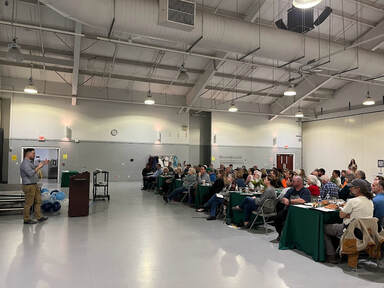
If this topic is of interest to readers of this article, Hamilton County Commissioner Mark Heirbrandt will be speaking and taking questions about water availability in Hamilton County at the Hamilton County SWCD Annual Meeting at the Hamilton County Fairgrounds on February 19th. This meeting will also include a review and overview of SWCD events and achievements from 2025, as well as lunch provided and the election of an SWCD Board Member. More info on the Annual Meeting, presentations, and election can be found here.
0 Comments

Nature Conservancy, in Partnership with Hamilton SWCD, Awarded Grant

2/2/2026

0 Comments

 
The Nature Conservancy, in partnership with, among others, the Hamilton County SWCD has acquired grant funds from the National Water Quality Initiative in the form of a Readiness Grant. This grant is based on the upstream waters that flow into Morse Lake from the Big Cicero Creek Watershed in northern Hamilton and Southern Tipton Counties. This grant provides funds for conservation projects that directly affect Morse Lake and its water quality. These conservation projects can range from cover crop programs to vegetative buffers and many projects in between.

If this topic is of interest to readers of this article, representatives from The Nature Conservancy will be speaking and taking questions about the NWQI Readiness Grant and how to be involved at the Hamilton County SWCD Annual Meeting at the Hamilton County Fairgrounds on February 19th. This meeting will also include a review and overview of SWCD events and achievements from 2025, as well as lunch provided and the election of an SWCD Board Member. More info on the Annual Meeting, presentations, and election can be found here. 
0 Comments

What Do the Persimmons Say?

2/2/2026

0 Comments

 
By Mark McCauley, Resource Conservationist 

That’s a good question, and it depends on which ones you “ask”, and how well you “listen”. What are we talking about? Midwesterners have looked to signs in nature for generations to predict seasonal weather, and in terms of persimmons, they have cut open the seeds and examined the shapes inside (called cotyledons), to predict the type of winter they are going to have. Those cotyledons will typically fit one of three different shapes. A “fork” (indicating a milder winter), a “spoon” (indicating a snowy winter), or a “knife” (indicating a bitter cold winter).

The idea is to gather local persimmon fruits in the fall, preferably after they have ripened and fallen to the ground. The persimmons I gathered for this experiment came from right here in central Hamilton County. I picked up persimmon fruit from 12 different trees on the same property, and then took one seed from each of those fruits. I washed the pulp off and dried the seeds, and then very carefully, used a sharp knife to split each one across the thin edge. What I found was a mixture of the three shapes, assuming I read them (listened) correctly. Later in this article I will get back to what I found, but more about persimmon trees.

Picture
Picture
Persimmon trees are a native tree of Indiana, and a favorite of local folks the further south you go in the state, it seems. In fact, one small town in Lawrence County holds a “Persimmon Festival” each year and has done so for decades. That little town is Mitchell, IN, home of astronaut Gus Grissom, and not far from Spring Mill State Park. I have been to this festival and it has a lot of local charm and fun.

I have read a lot about the idea that you need both male and female persimmon trees to produce fruit (to allow for cross pollination), but I have also read that sometimes certain varieties can self-pollinate, and that even in rare cases, certain trees may change their “sex” year to year. It is a bit confusing, and since I am no expert in that area, I won’t go into more detail here.
Persimmon fruits have not only been used by wildlife and humans for probably 1000’s of years, but the wood has been favored by golf club makers in years past, specifically for the driver heads. The heartwood can often contain very dark streaks (almost black) as it is the North American relative of the Ebony tree. The bark of mature trees is also quite distinctive, exhibiting a “checkerboard” appearance. Trees started from seed can start bearing fruit in 7 -9 years, but grafted trees may start bearing fruit as early as 3 years old, from what I have read.

Regarding human uses of the fruit, ripe persimmons can be processed to obtain the pulp, which can then be used in a variety of recipes for cake, cookies, bread, and my favorite, persimmon pudding. I did not know about this wonderful creation growing up, as persimmon trees were not common in my area. However, I have a good friend who lives in Daviess County, and his mom gave me my first introduction to this southern Indiana favorite many years ago. I was hooked from then on and have often made this treat in the Fall. In fact, it has become synonymous with Autumn for me …the collecting of the fruit, the distinctive sweet smell, the aroma of baking pudding …so good!
Picture
​Back to the seeds. Here is what I saw when I cut open 12 seeds (one from each of 12 trees). Five were “spoons”, four were “forks”, and three were “knives”. So how do we interpret that, according to old folklore? Spoons indicate a snowy winter (think of it as a tiny snow shovel). Forks indicate a milder winter. Knives indicate a harsh/cold winter (think of it as cold wind, cutting like a knife). So, what can we take away from these 12 seeds?
Picture
Picture
Picture
​Maybe this--a fairly snowy winter (more than in recent years), with a few severe wind chill days. There it is! An unscientific prediction that really means nothing, but still fun to do.
Have people looked to nature for other signs to predict weather? Yes, and there are a variety, including wooly worm colors, observing how active squirrels are collecting nuts, and even studying bear fat in a jar, but since we don’t have a lot of that in Hamilton County, persimmons, wooly worms, or squirrels will have to do.
0 Comments

Mark Heirbrandt to speak at Hamilton SWCD Annual Meeting

1/20/2026

0 Comments

 
This year we're honored to have County Commissioner Mark Heirbrandt speak at our Annual Meeting taking place Thursday February 19th, 2026 from 11am - 2pm at the Hamilton County 4-H Fairgrounds. For more info and to RSVP, click here. 

In 2013, Mark Heirbrandt took office as Hamilton County Commissioner for District 3. Throughout his tenure, Mark has consistently demonstrated a deep-rooted commitment to making a positive difference at the local level. As a testament to his unwavering dedication and contributions during his time in office, Mark was honored with the prestigious title of "Indiana County Commissioner of the Year Award' by the Indiana County Commissioners Association in 2022, as well as the “Commissioner of the Year Award” in 2023 from the Association of Indiana Counties.

In addition to Mark’s responsibilities as Hamilton County Commissioner, he collaborates across the state with other counties and commissioners to implement best practices as a Past IACC (Indiana Association of County Commissioners) Board President.
As an active member on various leadership boards, Mark serves as an Executive Board Member for the Humane Society for Hamilton County, the Hamilton County Community Foundation, and is a member of the Big Cicero Regional Board. Mark also serves as an Executive Board Member for the Metropolitan Planning Organization and was previously on the Westfield Public Safety Merit Board for six years. Mark enjoys being actively involved in several other nonprofits and charitable organizations across the county and state.

​Mark has received several distinguished and statewide awards, including the Advocate of the Year Award from the Humane Society for Hamilton County, recognition for Exceptional Leadership and Service from the Hamilton County Leadership Academy, the White River Alliance Member of the Year Award, and an IACC Award for Outstanding Team Effort for County Commissioners in 2017 & 2023. Other awards include several from the Association of Indiana Counties: Local Government Cooperation Award 2015, 2016, 2019 and 2024, the County Achievement Award.
​
Hamilton County is known for being one of the safest counties in the country and is consistently rated as one of the best places to live.
Mark has lived in Hamilton County for over 35 years with his family --- wife Gina, sons Blake, Ethan, and Evan and proud members of St. Maria Goretti Catholic Church
RSVP for the 2026 Annual Meeting Here
0 Comments

Do Trees Get Thirsty in the Winter?

1/20/2026

0 Comments

 
Picture
​Do trees and other plants get thirsty in the winter?  Well, it depends on the weather conditions, but generally, yes, especially newly planted trees. Older established trees have a more extensive root system and are more resilient to dry winters. Since we recently had a tree sale this past fall, I will concentrate on “new” trees as opposed to older established trees, however even older trees can experience winter drought issues. 

Although trees go dormant during winter months, their root systems still need adequate moisture and can suffer from lack of it. Regarding evergreen trees, which keep their needles throughout the winter, watering can be even more important, as they lose moisture through their needles faster than deciduous trees, which lose their leaves in the fall.
​
So, when should you consider watering?  Well, you should water your newly planted trees regularly up until freezing temperatures. Then also about 2 times per month during the winter if there is no snow cover on the ground or little precipitation.  It is also recommended that you water on days when the temperature is at least 40 degrees (with no snow or ice around the base of the tree) and do so in the morning so the tree roots have time to absorb the moisture before temperatures potentially drop back into the freezing range at night.  If it is a windy, dry winter, this is even more critical.  Trees that have experienced winter dryness may still look normal the next spring, but the damage may become apparent later in the summer with dieback of branches.

​Mulching with a good organic material will also help your new trees conserve moisture going into the winter, and weather the hard freezes better too.  However, keep in mind that mulch should not be piled up around the base of the tree like a small volcano, but more like a flat doughnut shape, leaving a “hole” (or space) around the base of the tree.  Stacking mulch up against the bark of the tree, which is meant to be above ground, can encourage disease and pest problems which can more easily enter the bark than the root system.

You may find it suitable to carry water to your trees, but a hose may be easier if you have access to it.  Laying a soaker hose around the base of the tree is also an option, but whatever hose you do use, remember to drain it and put it away, as frozen hoses are a pain to deal with.

So far this winter we have seemed to have quite a bit of moisture, so watering may not be a need in your location yet, but that could change quickly.  One method you could use to check soil moisture is to dig a small hole down at least 2 inches within the “dripline” (diameter of the crown spread) of the tree and feel the soil.  If is feels damp, the tree should be fine, but if it feels dry, then watering might be needed.
​
I know gray wintery days might not seem like the time to water, but if it is a dry ground, windy type of winter, it could be very important.  You invested time and money in your new trees, so be sure to take the necessary steps to protect that investment.

0 Comments

New look, new office

1/5/2026

0 Comments

 
Picture
New Year, New Look, New Office
​
​
New year, new look, and a new office! As we head into the year ahead, Hamilton County Soil & Water Conservation District is excited to launch an updated brand and welcome the community into our new office space. This refresh reflects the growth of conservation work happening across Hamilton County and our commitment to serving residents, landowners, and partners in more visible and accessible ways.

While our look and location may be new, our mission remains the same: protecting clean water, strengthening soil health, supporting local agriculture, and helping people care for the land and water where they live. Our new office was designed to be welcoming and functional—a place where community members can stop in, ask questions, learn about conservation programs, and connect with staff.
​
We invite you to visit us at our new location, explore the space, and see how conservation comes to life across Hamilton County. Whether you’re a longtime partner or just getting started, we look forward to working with you in the year ahead.
WHERE TO FIND US
​
1721 Pleasant St. Unit A Noblesville, IN 46060
(The former Humane Society/Spay & Neuter Clinic)

Picture

Check out the short video below to see how the components of our new logo convey our mission.

New Look, Same Mission: The Story Behind Our Logo
​
Our updated logo reflects the land, water, and people that shape Hamilton County and inspire our conservation work every day. At its center is the White River, whose iconic bend through the county forms the arch of the “H.” Water is the heart of our landscape—and protecting clean, healthy waterways remains the foundation of everything we do.

The greens and golds on the right side of the logo represent agriculture, soil health, and working lands. These shapes reflect the fields, riparian areas, and natural systems that support both food production and water quality. Stewardship of these lands—through conservation practices that protect soil and water—continues to be a core focus of our work.
​
On the left side of the logo, a small house represents neighborhoods, yards, and everyday places where conservation begins. From rain gardens and native plants to responsible lawn care and invasive species removal, conservation starts at home and grows through community action. This element reflects our commitment to helping residents play an active role in caring for their local environment.
​
Together, these elements highlight the diversity of land use across Hamilton County and the many ways people can participate in conservation. Our new look celebrates the connection between water, land, and community—and the shared responsibility we have to protect them.
0 Comments

When It Comes to De-Icing, Less Is More

12/4/2025

0 Comments

 
​Winter is here, and with it comes icy sidewalks and driveways. Before you reach for the salt bag, remember — a little goes a long way. Using more salt doesn’t make ice melt faster; it simply increases chloride-heavy runoff that harms your soil, plants, and local waterways.

Once the snow melts, the salt finds its way into lakes, rivers, streams and groundwater, where it can pose a serious threat to freshwater fish and other wildlife. In Hamilton County, that means every extra handful eventually reaches our creeks, ponds, and the White River. Just one teaspoon of road salt can permanently pollute five gallons of water. 

Excess salt can also build up in your soils-- impacting your grass and planting beds!  
For safe and sustainable winter maintenance:
  • ​Shovel first. Clear all snow from driveways and sidewalks before it turns to ice.
  • Salt should only be used after the snow is removed and only in areas needed for safety.
  • Untreated salt stops working if the temperature is below 15 degrees. When temperatures drop that low, switch to sand for traction or choose a different deicer formulated for colder temperatures.
  • Distribute salt evenly, not in clumps. Clumped salt is wasted salt.​
    • ​Use salt sparingly — a 12-ounce coffee mug of salt covers about ten sidewalk squares or a typical driveway.
  • Follow the label directions. If only a handful of rock salt per square yard is needed, using more isn't more effective, just more expensive.
    • Grains of salt should be roughly 3 inches apart from each other
  • Sweep up extra salt to reuse.
  • Don't use rock salt within 5-10 feet of salt-sensitive plants.
  • Store in a waterproof container to prevent leaks or spills
​Small changes like these protect both your safety and our shared water resources. Let’s keep our winter walks safe and our water clean.
Picture
To reduce the use of salt, use no more than a cup or a cup and a half of rock salt for every 10 sidewalk squares or every 2 parking spaces. There should be about 3 inches between each of the salt grains. Image: Lake Superior Streams
Picture

Potential Harmful Effects of Salt Deicers
  • Contaminates drinking water reservoirs and wells by infiltrating nearby surface and groundwater
    • High sodium in drinking water affects people with high blood pressure and low-salt diets
  • Can kill or endanger wildlife
    • Toxic to some fish, bugs, and amphibians or can harm their ability to reproduce
    • Deer lick road salt, increasing the chances of vehicle collisions with deer
    • Kills zooplankton, which impacts the food chain
  • Damages private and public property
    • Corrosive to plumbing, vehicles, roads, and bridges
  • Irritates dogs’ and cats’ feet by causing burns and inflammation, which are worsened by licking
  • Kills roadside and driveway plants and grass
  • Chloride moves with water, and the process to treat and remove it from water is expensive 
Picture
Picture

​More info and resources:
​UVM - Reducing deicing salt use 
Guide to Salt Management for Homeowners: Deicing and Water Softeners
0 Comments

Fall Conservation and Sustainability Checklist Links

10/30/2025

0 Comments

 
Check out the links below for more information on sustainable choices you can make this fall. 
Put Your Garden to Bed for the Winter
Winterize Rain Barrels
What to do with Fall Leaves
Volunteer!
Composting Basics
Picture
0 Comments

Pay Dirt Recap

10/10/2025

0 Comments

 
On August 14-15, 2025, Noblesville Stormwater in group partnership with, among others, Elkhart County SWCD, the Hamilton County Surveyor’s Office, and Hamilton County SWCD held its first-annual Pay Dirt conference at the Hamilton County 4-H Fairgrounds. The two-day event included equipment demonstrations, construction site tours, educational sessions, as well as vendor contact time. Around 90 attendees learned how the stormwater sector is related to the agricultural and construction sectors through discussion, learning, and literal channels. While some folks thought rooms were too cold and technology did not always cooperate, the event organizers deemed it a success and look forward to hosting the event again next year in the fall.
Picture
0 Comments

The Figurelli Family: A Small Farm Making a Big Impact

10/7/2025

0 Comments

 
​Heather and Jeff Figurelli’s farm may only be 11 acres, but it’s already made a big impact in its three short years of existence. Their story started thanks to Heather’s love of gardening, pigs, and her family’s farming history.

“Our middle child, Tommy, also likes pigs,” Heather said. “We visited Oinking Acres in Brownsburg and fell madly in love with it.”

The family continued to enjoy Oinking Acres and found a sense of peace unlike any other, especially for Heather, who had recently lost her mother to brain cancer. This led to a strong desire to own a pig of their own. However, they lived in a subdivision in Fishers at the time. Heather had educated her HOA about native plants and had reached her limit with them on their property.

Eventually, the couple began to consider looking for their own piece of land, one they could gradually convert to native plantings that would also nurture small farm animals. In the spring of 2022, they searched and found a property for sale on Atlantic Road in Noblesville. Heather believes her mother’s spirit guided them to it.

“It was just barren farmland with nothing on it,” Jeff said. “We put in an offer and drew up a plan of native beds and spaces for animals.”

As their house and property began to take shape later that summer, the couple would visit the land and have a picnic with their three children, Alexis, Tommy, and Joey. Tommy, now age 9, shared that, “It was the most peaceful part of my entire life.”

They learned about the Hamilton County Soil and Water Conservation District and the local USDA after experiencing issues when they planted 100 saplings. Thanks to their guidance, Jeff and Heather hired a company to plant native prairie, who seeded part of their property in the fall of 2022. The prairie is on the existing county drain tile at the back of their farm. They did no-till seeding of three acres, with 13 forbs and 6 grasses.

Finally, in March of 2023, the family moved to what they affectionately call “Fig’s Farm.”

Fig’s Farm is a feast for the senses. It features native beds; rescue animals including chickens, mini pigs, bunnies, geese, ducks, and turkeys; a sledding hill; native trees; and a pond.

“We keep adding where we can,” said Heather. “We tried to put wet native plants in with 50-60 plugs, but the geese ripped them up.”

True to the “sleep, creep, leap” concept of native plants, the family was thrilled to see how much their efforts have paid off in 2025.

“This year was the coolest! We have massive amounts of dragonflies and butterflies, tons of frogs… our pond is stocked, and we see heron and egrets fly in all the time,” Heather shared.

While Heather knew she came from a family of farmers, she didn’t realize that her maternal grandfather used similar practices on his larger farm in Perry County.

“He was innovative with farming, using no-till and water conservation practices,” she said. In fact, her grandfather, Justine Etienne, was the Perry County Conservationist of the Year in 1979 and a Master Farm Conservationist in 1992. According to a November 1992 issue of Prairie Farmer, his no-till results spurred widespread adoption. His sons, who inherited and worked the farm later, used those same practices.

The family awards continue to this day. Jeff and Heather were honored at the state fair in 2025 with the River Friendly Farmer Award for Hamilton County.

“This was the same award my uncles won in 2007 for Perry County,” Heather said.

Jeff and Heather shared that they were surrounded by large family farms at the ceremony and “almost felt guilty.” However, Heather’s work friend reminded her that they were standing on generations.

“She pointed out that we’re creating our generation and legacy from scratch,” Heather stated. 

Their daughter, Alexis, age 11, even won the SWCD photo contest in her age group last summer.

The Hamilton County SWCD has been a crucial partner for the Figurellis from the beginning. Together with the USDA, the SWCD helped them with erosion issues around their pond. The entire office toured Fig’s Farm last spring. Jeff and Heather buy native plants and trees during the SWCD’s sale each year.

“I feel like what they’re doing is an awesome example. I wish more people knew about them,” Heather shared. “If we can do this, other people can.”

Fig’s Farm goes beyond their own family by having a farm stand that serves as an educational project for kids; hosting Girl Scout groups; and even helping Oinking Acres by donating a memorial garden for pigs who can’t be saved. Heather plans to continue giving her time to Oinking Acres.

Jeff and Heather share their practices on their Facebook page, Fig’s Farm. Their former neighbors in Fishers were inspired thanks to Facebook and now plant natives.

“Everybody has been supportive,” Jeff said. “We have so many friends that come over because they find it peaceful and amazing. Kids come out to learn about animal rescue and native plants. We’ve made friends through our farm stand.”

The couple loves watching their children play on their property along with friends. They run through the prairies, interact with the animals, and enjoy being out in nature.

Heather and Jeff will continue to expand their practices. Plans include a berm around their pond, reseeding a low spot on their property that geese had destroyed, expanding their beds, buying shrubs from the SWCD fall sale to surround their pool, and creating a diverse winter habitat for birds and other animals. They’ll also do winter sowing to yield little starts of plants for springtime.

Their front yard will eventually be all native,  and their prairie is growing on its own thanks to seeds blowing over from the wind.

“My goal is to get a small grower nursery license,” Heather said. “I’d like to help HOAs accept more natives, such as prairie smoke, which is a smaller plant.”

The couple is certainly busy, since Heather works full-time as a gastroenterologist, while Jeff is a stay-at-home dad/farm/house manager. Both believe that Fig’s Farm will be their legacy.
​
“When we started, we wanted it just for us. Now, we educate people,” Jeff said. “If just one person can rethink about what they plan in their yard, we’re making a difference.” 


This story was written by Amy Shankland.
0 Comments
<<Previous

    Author

    Write something about yourself. No need to be fancy, just an overview.

    Archives

    February 2026
    January 2026
    December 2025
    October 2025
    September 2025
    August 2025
    July 2025
    June 2025
    May 2025
    April 2025
    March 2025
    February 2025
    December 2024
    November 2024
    October 2024
    August 2024
    July 2024
    June 2024
    May 2024
    March 2024
    January 2024
    December 2023
    August 2023
    June 2023
    March 2023
    August 2022
    July 2022
    June 2022
    May 2022
    March 2022
    January 2022
    November 2021
    October 2021
    August 2021
    July 2021
    March 2021
    January 2021
    December 2020
    October 2020
    June 2020
    April 2020
    March 2020
    January 2020
    October 2019
    September 2019
    August 2019
    July 2019
    Categories

    All
    Canada Thistle
    Crop Diversity
    Garden Tower
    Hamilton SWCD
    Indiana
    Invasive Species
    Karner Blue
    Lupinus Perennis
    Native Plants
    Pet Safety
    Soil Health
    Soil Testing
    Urban Conservation
    Urban Gardening
    Volunteer
    Water Quality
    White River
    Wild Lupine

    RSS Feed

Your SWCD

​About
​Services
Newsletter
Volunteer
Contact Us

[email protected]
317.773.2181
NEW ADDRESS AS OF DEC. 1 2025
1721 Pleasant St. Unit A
Noblesville, IN 46060
Established in 1968
© COPYRIGHT 2026. ALL RIGHTS RESERVED.
Photo from andurache