
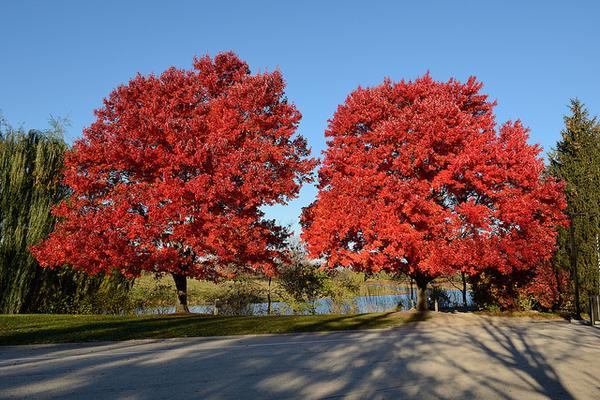
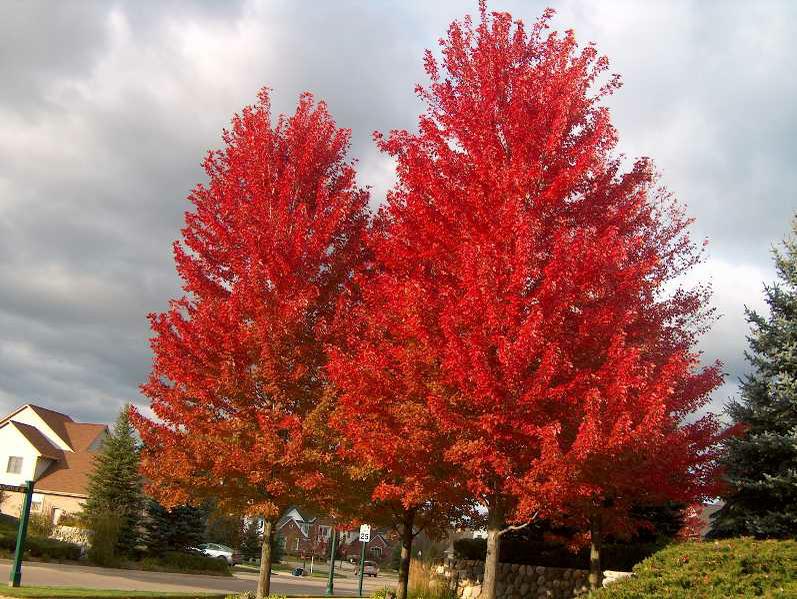
Red Maple
Red Maple
Acer rubrum
Plant Details:
Plant type: Tree | Straight native species
Sun: Full sun to part shade
Soil moisture: Medium to wet
Mature size: 40–70 ft. tall × 30–50 ft. wide
Bloom time: March–April
Growth rate: Fast
Container size: 3 gallon pot
Estimated size at pickup in feet (if available): 4-5
Great For
• Large shade tree
• Rain gardens and low areas
• Naturalized landscapes
Ecological Benefits
• Early flowers provide pollen and nectar for bees. Seeds and buds are eaten by birds and small mammals, and the foliage supports many caterpillars.
Why We Recommend It
We recommend Red Maple for customers who want quick shade, dependable fall color, and a native tree that can handle more moisture than many common landscape trees. It works especially well in large yards, low areas, and rain-garden settings. Early flowers help pollinators, and the tree supports many caterpillars while feeding birds and mammals. Give it generous space away from pavement, where its broad canopy and surface roots can develop without creating conflicts.
Good to Know
• Fast-growing native shade tree
• Strong fall color
• Adaptable to periodically wet sites
Care/behavior information: Water during establishment and prolonged drought. Prune young trees to develop strong branch structure.
Warning or placement concerns (if applicable): Shallow surface roots can compete with turf and lift pavement. Branches may break in ice or wind, and alkaline soils may cause chlorosis.
Notable wildlife detail (if applicable): Host plant for numerous native moths and butterflies.
Deer resistant (if applicable):
Rabbit resistant (if applicable):
Special tolerances: Clay soil; temporary flooding; urban conditions
Fall 2026 Plant Pickup
This is a preorder item and will not be available until our fall pickup event. Plants are not shipped.
Pickup Dates
Thursday, October 1, 2026 |11:00 AM–6:00 PM in Noblesville, IN
Friday, October 2, 2026 | 10:00 AM–1:00 PM in Noblesville, IN
Pickup Location
Hamilton County Fairgrounds in Noblesville, Indiana. More info will be shared via email as the pick-up dates approach.
Please plan to pick up your order during one of these scheduled times. Plants are living material and cannot be held beyond the pickup event unless prior arrangements have been made.
Plant Guarantee
We guarantee that you will receive a healthy plant at pickup. Because survival depends on planting methods, weather, site conditions, and ongoing care, we cannot offer refunds or guarantees after pickup. Height estimates are approximate and not guaranteed. Remember that you're investing in a healthy root system—the foundation of long-term success—not simply above-ground height.
Photos courtesy of Arbor Day Foundation and/or Missouri Botanical Garden Plant Finder.
Red Maple
Red Maple
Acer rubrum
Plant Details:
Plant type: Tree | Straight native species
Sun: Full sun to part shade
Soil moisture: Medium to wet
Mature size: 40–70 ft. tall × 30–50 ft. wide
Bloom time: March–April
Growth rate: Fast
Container size: 3 gallon pot
Estimated size at pickup in feet (if available): 4-5
Great For
• Large shade tree
• Rain gardens and low areas
• Naturalized landscapes
Ecological Benefits
• Early flowers provide pollen and nectar for bees. Seeds and buds are eaten by birds and small mammals, and the foliage supports many caterpillars.
Why We Recommend It
We recommend Red Maple for customers who want quick shade, dependable fall color, and a native tree that can handle more moisture than many common landscape trees. It works especially well in large yards, low areas, and rain-garden settings. Early flowers help pollinators, and the tree supports many caterpillars while feeding birds and mammals. Give it generous space away from pavement, where its broad canopy and surface roots can develop without creating conflicts.
Good to Know
• Fast-growing native shade tree
• Strong fall color
• Adaptable to periodically wet sites
Care/behavior information: Water during establishment and prolonged drought. Prune young trees to develop strong branch structure.
Warning or placement concerns (if applicable): Shallow surface roots can compete with turf and lift pavement. Branches may break in ice or wind, and alkaline soils may cause chlorosis.
Notable wildlife detail (if applicable): Host plant for numerous native moths and butterflies.
Deer resistant (if applicable):
Rabbit resistant (if applicable):
Special tolerances: Clay soil; temporary flooding; urban conditions
Fall 2026 Plant Pickup
This is a preorder item and will not be available until our fall pickup event. Plants are not shipped.
Pickup Dates
Thursday, October 1, 2026 |11:00 AM–6:00 PM in Noblesville, IN
Friday, October 2, 2026 | 10:00 AM–1:00 PM in Noblesville, IN
Pickup Location
Hamilton County Fairgrounds in Noblesville, Indiana. More info will be shared via email as the pick-up dates approach.
Please plan to pick up your order during one of these scheduled times. Plants are living material and cannot be held beyond the pickup event unless prior arrangements have been made.
Plant Guarantee
We guarantee that you will receive a healthy plant at pickup. Because survival depends on planting methods, weather, site conditions, and ongoing care, we cannot offer refunds or guarantees after pickup. Height estimates are approximate and not guaranteed. Remember that you're investing in a healthy root system—the foundation of long-term success—not simply above-ground height.
Photos courtesy of Arbor Day Foundation and/or Missouri Botanical Garden Plant Finder.
Allegheny Serviceberry
Amelanchier laevis
Plant Details:
Plant type: Tree | Straight native species
Sun: Full sun to part shade
Soil moisture: Medium
Mature size: 15–25 ft. tall × 15–20 ft. wide
Bloom time: April
Growth rate: Medium
Container size: 3 gallon pot
Estimated size at pickup in feet (if available): 4-5
Great For
• Small specimen or understory tree
• Edible landscape
• Wildlife garden or informal screen
Ecological Benefits
• Early flowers support pollinators, and the berries are highly attractive to songbirds and other wildlife.
Why We Recommend It
We recommend Allegheny Serviceberry as a small native tree that delivers interest through several seasons without overwhelming a residential landscape. White spring flowers feed early pollinators, edible summer berries attract songbirds, and the graceful form works well near woodland edges or in an edible garden. It is also a host plant for Red-spotted Purple and Viceroy butterflies. Provide consistent moisture and good drainage, especially during establishment, for the healthiest growth and best fruit display.
Good to Know
• White spring flowers
• Edible summer berries
• Excellent small native tree for four-season interest
Care/behavior information: Prune when young if a single-trunk tree form is desired. Provide water during dry periods.
Warning or placement concerns (if applicable): Not reliably drought tolerant. Susceptible to rust, fire blight, and powdery mildew; fruit quality can decline in persistently wet weather.
Notable wildlife detail (if applicable): Host plant for the Red-spotted Purple and Viceroy butterflies.
Deer resistant (if applicable):
Rabbit resistant (if applicable):
Special tolerances: Acidic soil
Fall 2026 Plant Pickup
This is a preorder item and will not be available until our fall pickup event. Plants are not shipped.
Pickup Dates
Thursday, October 1, 2026 |11:00 AM–6:00 PM in Noblesville, IN
Friday, October 2, 2026 | 10:00 AM–1:00 PM in Noblesville, IN
Pickup Location
Hamilton County Fairgrounds in Noblesville, Indiana. More info will be shared via email as the pick-up dates approach.
Please plan to pick up your order during one of these scheduled times. Plants are living material and cannot be held beyond the pickup event unless prior arrangements have been made.
Plant Guarantee
We guarantee that you will receive a healthy plant at pickup. Because survival depends on planting methods, weather, site conditions, and ongoing care, we cannot offer refunds or guarantees after pickup. Height estimates are approximate and not guaranteed. Remember that you're investing in a healthy root system—the foundation of long-term success—not simply above-ground height.
Photos courtesy of Arbor Day Foundation and/or Missouri Botanical Garden Plant Finder.
Paw Paw
Pawpaw
Asimina triloba
Plant Details:
Plant type: Tree | Straight native species
Sun: Full sun to shade
Soil moisture: Medium to wet
Mature size: 15–30 ft. tall × 15–30 ft. wide
Bloom time: April–May
Growth rate: Medium
Container size: 3 gallon pot
Estimated size at pickup in feet (if available): 1-2
Great For
• Edible landscape
• Woodland edge or understory
• Naturalized planting
Ecological Benefits
• Flowers are pollinated mainly by flies and beetles. Fruit is eaten by mammals, and the foliage supports specialized caterpillars.
Why We Recommend It
Pawpaw brings a tropical look, edible fruit, and an important butterfly relationship to Indiana landscapes. We recommend it for woodland edges, edible gardens, and naturalized areas where the young tree can receive some protection from intense sun. Its foliage is the exclusive caterpillar food for the Zebra Swallowtail, and its large fruits are enjoyed by people and wildlife. Plant at least two genetically different trees for pollination, and expect the best fruiting once mature plants receive more sunlight.
Good to Know
• Produces the largest edible fruit native to North America
• Tropical-looking foliage
• Valuable small tree for edible and wildlife landscapes
Care/behavior information: Plant at least two genetically different trees for reliable fruit set. Remove suckers if a single specimen is preferred.
Warning or placement concerns (if applicable): Young plants may benefit from some shade, while mature trees fruit best in sun. Plants are not self-fertile, and handling fruit or foliage may irritate sensitive people.
Notable wildlife detail (if applicable): The exclusive larval host plant for the Zebra Swallowtail butterfly.
Deer resistant (if applicable):
Rabbit resistant (if applicable):
Special tolerances: Shade tolerant; seasonal wetness
Fall 2026 Plant Pickup
This is a preorder item and will not be available until our fall pickup event. Plants are not shipped.
Pickup Dates
Thursday, October 1, 2026 |11:00 AM–6:00 PM in Noblesville, IN
Friday, October 2, 2026 | 10:00 AM–1:00 PM in Noblesville, IN
Pickup Location
Hamilton County Fairgrounds in Noblesville, Indiana. More info will be shared via email as the pick-up dates approach.
Please plan to pick up your order during one of these scheduled times. Plants are living material and cannot be held beyond the pickup event unless prior arrangements have been made.
Plant Guarantee
We guarantee that you will receive a healthy plant at pickup. Because survival depends on planting methods, weather, site conditions, and ongoing care, we cannot offer refunds or guarantees after pickup. Height estimates are approximate and not guaranteed. Remember that you're investing in a healthy root system—the foundation of long-term success—not simply above-ground height.
Photos courtesy of Arbor Day Foundation and/or Missouri Botanical Garden Plant Finder.
Hackberry
Common Hackberry
Celtis occidentalis
Plant Details:
Plant type: Tree | Straight native species
Sun: Full sun to part shade
Soil moisture: Dry to wet
Mature size: 40–60 ft. tall × 40–60 ft. wide
Bloom time: April–May
Growth rate: Fast
Container size: 3 gallon pot
Estimated size at pickup in feet (if available): 4-5
Great For
• Large shade tree
• Urban or exposed site
• Wildlife and naturalized planting
Ecological Benefits
• Fruit feeds many birds and mammals, and the tree is an important caterpillar host. Its branching also provides nesting and shelter.
Why We Recommend It
We recommend Common Hackberry as one of the toughest native shade trees for difficult Indiana sites. It grows quickly, tolerates clay, drought, temporary flooding, wind, and urban conditions, and provides exceptional wildlife value. Its fruit feeds many birds and mammals, while the foliage hosts Hackberry Emperor, Tawny Emperor, Mourning Cloak, Question Mark, and American Snout butterflies. Give it room to mature, and expect harmless leaf galls or occasional fruit cleanup rather than a perfectly manicured appearance.
Good to Know
• Tough, fast-growing native shade tree
• Highly adaptable to difficult urban sites
• Exceptional wildlife value
Care/behavior information: Little routine maintenance is required once established.
Warning or placement concerns (if applicable): Leaf galls and witches'-broom are common but usually cosmetic. Fallen fruit can create cleanup near sidewalks or patios.
Notable wildlife detail (if applicable): Host plant for Hackberry Emperor, Tawny Emperor, Question Mark, Mourning Cloak, and American Snout butterflies.
Deer resistant (if applicable):
Rabbit resistant (if applicable):
Special tolerances: Drought; clay soil; temporary flooding; wind; urban pollution
Fall 2026 Plant Pickup
This is a preorder item and will not be available until our fall pickup event. Plants are not shipped.
Pickup Dates
Thursday, October 1, 2026 |11:00 AM–6:00 PM in Noblesville, IN
Friday, October 2, 2026 | 10:00 AM–1:00 PM in Noblesville, IN
Pickup Location
Hamilton County Fairgrounds in Noblesville, Indiana. More info will be shared via email as the pick-up dates approach.
Please plan to pick up your order during one of these scheduled times. Plants are living material and cannot be held beyond the pickup event unless prior arrangements have been made.
Plant Guarantee
We guarantee that you will receive a healthy plant at pickup. Because survival depends on planting methods, weather, site conditions, and ongoing care, we cannot offer refunds or guarantees after pickup. Height estimates are approximate and not guaranteed. Remember that you're investing in a healthy root system—the foundation of long-term success—not simply above-ground height.
Photos courtesy of Arbor Day Foundation and/or Missouri Botanical Garden Plant Finder.
Buttonbush
Buttonbush
Cephalanthus occidentalis
Plant Details:
Plant type: Shrub | Straight native species
Sun: Full sun to part shade
Soil moisture: Medium to wet
Mature size: 5–12 ft. tall × 5–12 ft. wide
Bloom time: June–August
Growth rate: Medium to fast
Container size: 3 gallon pot
Estimated size at pickup in feet (if available): 2-3
Great For
• Rain gardens and pond edges
• Wetland restoration and streambanks
• Large wildlife gardens and naturalized screens
Ecological Benefits
• Flower heads draw bees, butterflies, moths, and hummingbirds. Seeds are eaten by ducks and other waterfowl, and dense growth provides cover.
Why We Recommend It
Buttonbush is one of the best native shrubs for wet ground and one of the most active pollinator plants in summer. Its distinctive globe-shaped flowers attract bees, butterflies, moths, and hummingbirds, while the seeds feed ducks and other birds. We recommend it for rain gardens, pond edges, streambanks, and wetland restoration. It can tolerate standing water and seasonal flooding, but it becomes a large, sometimes suckering shrub, so allow generous space and keep it away from tight foundation beds.
Good to Know
• Distinctive spherical flowers
• Outstanding pollinator and wildlife shrub
• One of the best native shrubs for wet sites
Care/behavior information: Prune in late winter to control size or rejuvenate older stems. It responds well to hard pruning.
Warning or placement concerns (if applicable): Allow ample room; it can become a large shrub and sucker in wet ground. Plant parts may be toxic if eaten.
Notable wildlife detail (if applicable):
Deer resistant (if applicable): Yes
Rabbit resistant (if applicable):
Special tolerances: Standing water; seasonal flooding; clay soil; compaction; heat; erosion
Fall 2026 Plant Pickup
This is a preorder item and will not be available until our fall pickup event. Plants are not shipped.
Pickup Dates
Thursday, October 1, 2026 |11:00 AM–6:00 PM in Noblesville, IN
Friday, October 2, 2026 | 10:00 AM–1:00 PM in Noblesville, IN
Pickup Location
Hamilton County Fairgrounds in Noblesville, Indiana. More info will be shared via email as the pick-up dates approach.
Please plan to pick up your order during one of these scheduled times. Plants are living material and cannot be held beyond the pickup event unless prior arrangements have been made.
Plant Guarantee
We guarantee that you will receive a healthy plant at pickup. Because survival depends on planting methods, weather, site conditions, and ongoing care, we cannot offer refunds or guarantees after pickup. Height estimates are approximate and not guaranteed. Remember that you're investing in a healthy root system—the foundation of long-term success—not simply above-ground height.
Photos courtesy of Arbor Day Foundation and/or Missouri Botanical Garden Plant Finder.
Redbud
Eastern Redbud
Cercis canadensis
Plant Details:
Plant type: Tree | Straight native species
Sun: Full sun to part shade
Soil moisture: Medium
Mature size: 20–30 ft. tall × 25–35 ft. wide
Bloom time: April
Growth rate: Medium
Container size: 3 gallon pot
Estimated size at pickup in feet (if available): 4-5
Great For
• Small specimen tree
• Pollinator or wildlife garden
• Woodland edge and residential landscape
Ecological Benefits
• The early flowers feed bees and other pollinators, and the foliage supports butterfly and moth caterpillars. Seeds are eaten by birds.
Why We Recommend It
Eastern Redbud is a dependable small native tree for customers who want dramatic early spring flowers without the scale of a large shade tree. Pink-purple blooms cover the bare branches before leaves emerge, providing valuable food for early bees. The foliage also supports native caterpillars, and birds eat the seeds. We recommend it for residential landscapes, woodland edges, and pollinator gardens with well-drained soil. Avoid major root disturbance, wet sites, and locations exposed to repeated branch damage.
Good to Know
• Showy flowers cover bare branches in early spring
• Compact native flowering tree
• Valuable early-season pollinator plant
Care/behavior information: Prune young trees to develop good branch structure. Water during establishment and drought.
Warning or placement concerns (if applicable): Relatively short-lived and prone to branch breakage and canker. Avoid poorly drained soil and major root disturbance.
Notable wildlife detail (if applicable): Supports the specialist bee Habropoda laboriosa and serves as a host for Henry's Elfin butterfly.
Deer resistant (if applicable): Yes
Rabbit resistant (if applicable):
Special tolerances: Clay soil; black walnut
Fall 2026 Plant Pickup
This is a preorder item and will not be available until our fall pickup event. Plants are not shipped.
Pickup Dates
Thursday, October 1, 2026 |11:00 AM–6:00 PM in Noblesville, IN
Friday, October 2, 2026 | 10:00 AM–1:00 PM in Noblesville, IN
Pickup Location
Hamilton County Fairgrounds in Noblesville, Indiana. More info will be shared via email as the pick-up dates approach.
Please plan to pick up your order during one of these scheduled times. Plants are living material and cannot be held beyond the pickup event unless prior arrangements have been made.
Plant Guarantee
We guarantee that you will receive a healthy plant at pickup. Because survival depends on planting methods, weather, site conditions, and ongoing care, we cannot offer refunds or guarantees after pickup. Height estimates are approximate and not guaranteed. Remember that you're investing in a healthy root system—the foundation of long-term success—not simply above-ground height.
Photos courtesy of Arbor Day Foundation and/or Missouri Botanical Garden Plant Finder.
nt Finder
Flowering Dogwood
Flowering Dogwood
Cornus florida
Plant Details:
Plant type: Tree | Straight native species
Sun: Full sun to part shade
Soil moisture: Medium
Mature size: 15–30 ft. tall × 15–30 ft. wide
Bloom time: April–May
Growth rate: Medium
Container size: 3 gallon pot
Estimated size at pickup in feet (if available): 3-4
Great For
• Small specimen or understory tree
• Woodland edge
• Wildlife and pollinator garden
Ecological Benefits
• Flowers support bees and other pollinators. Red fruits are eaten by songbirds and other wildlife, and the branching provides cover.
Why We Recommend It
Flowering Dogwood is a classic native understory tree with white spring bracts, red fall fruit, and colorful autumn foliage. We recommend it for woodland edges, small specimen plantings, and wildlife gardens where it receives afternoon shade, good drainage, and protection from harsh urban conditions. Its flowers support pollinators, and the fruit is especially valuable to migrating and resident songbirds. Careful siting is important because exposed heat, compacted soil, poor drainage, and several diseases can shorten its life.
Good to Know
• Classic native flowering tree
• Beautiful spring bloom and fall color
• Strong value for birds and pollinators
Care/behavior information: Mulch the root zone, water during drought, and minimize root disturbance.
Warning or placement concerns (if applicable): Can struggle in hot, compacted, exposed, or poorly drained sites. Anthracnose, powdery mildew, and borers may be concerns.
Notable wildlife detail (if applicable): Especially valuable to fruit-eating songbirds in late summer and fall.
Deer resistant (if applicable):
Rabbit resistant (if applicable):
Special tolerances: Clay soil; black walnut
Fall 2026 Plant Pickup
This is a preorder item and will not be available until our fall pickup event. Plants are not shipped.
Pickup Dates
Thursday, October 1, 2026 |11:00 AM–6:00 PM in Noblesville, IN
Friday, October 2, 2026 | 10:00 AM–1:00 PM in Noblesville, IN
Pickup Location
Hamilton County Fairgrounds in Noblesville, Indiana. More info will be shared via email as the pick-up dates approach.
Please plan to pick up your order during one of these scheduled times. Plants are living material and cannot be held beyond the pickup event unless prior arrangements have been made.
Plant Guarantee
We guarantee that you will receive a healthy plant at pickup. Because survival depends on planting methods, weather, site conditions, and ongoing care, we cannot offer refunds or guarantees after pickup. Height estimates are approximate and not guaranteed. Remember that you're investing in a healthy root system—the foundation of long-term success—not simply above-ground height.
Photos courtesy of Arbor Day Foundation and/or Missouri Botanical Garden Plant Finder.
Red Osier Dogwood
Red Osier Dogwood
Cornus sericea
Plant Details:
Plant type: Shrub | Straight native species
Sun: Full sun to part shade
Soil moisture: Medium to wet
Mature size: 6–9 ft. tall × 8–12 ft. wide
Bloom time: May–June
Growth rate: Fast
Container size: 3 gallon pot
Estimated size at pickup in feet (if available): 2-3
Great For
• Rain gardens and streambanks
• Informal screens and wildlife hedges
• Erosion control and naturalized plantings
Ecological Benefits
• Flowers support native pollinators. Berries feed songbirds and mammals, and dense stems provide nesting and cover.
Why We Recommend It
Red Osier Dogwood is a versatile wet-site shrub best known for its brilliant red winter stems. We recommend it for rain gardens, streambanks, informal screens, and erosion-control plantings where dense, spreading growth is useful. Spring flowers support native pollinators, berries feed birds and mammals, and the thicket provides nesting and shelter. It tolerates clay, flooding, and cold conditions, but it spreads by suckers and is frequently browsed by deer, so it is not ideal for small formal beds.
Good to Know
• Brilliant red winter stems
• Tough shrub for moist and difficult sites
• High wildlife and erosion-control value
Care/behavior information: For the brightest stem color, remove about one-third of the oldest stems at ground level each spring or rejuvenate periodically.
Warning or placement concerns (if applicable): Spreads by suckers and may outgrow small beds. Deer commonly browse stems and foliage.
Notable wildlife detail (if applicable): Dogwoods support numerous native butterfly and moth caterpillars.
Deer resistant (if applicable):
Rabbit resistant (if applicable):
Special tolerances: Clay soil; wet soil; seasonal flooding; cold; erosion
Fall 2026 Plant Pickup
This is a preorder item and will not be available until our fall pickup event. Plants are not shipped.
Pickup Dates
Thursday, October 1, 2026 |11:00 AM–6:00 PM in Noblesville, IN
Friday, October 2, 2026 | 10:00 AM–1:00 PM in Noblesville, IN
Pickup Location
Hamilton County Fairgrounds in Noblesville, Indiana. More info will be shared via email as the pick-up dates approach.
Please plan to pick up your order during one of these scheduled times. Plants are living material and cannot be held beyond the pickup event unless prior arrangements have been made.
Plant Guarantee
We guarantee that you will receive a healthy plant at pickup. Because survival depends on planting methods, weather, site conditions, and ongoing care, we cannot offer refunds or guarantees after pickup. Height estimates are approximate and not guaranteed. Remember that you're investing in a healthy root system—the foundation of long-term success—not simply above-ground height.
Photos courtesy of Arbor Day Foundation and/or Missouri Botanical Garden Plant Finder.
Persimmon
American Persimmon
Diospyros virginiana
Plant Details:
Plant type: Tree | Straight native species
Sun: Full sun to part shade
Soil moisture: Dry to medium
Mature size: 35–60 ft. tall × 25–35 ft. wide
Bloom time: May–June
Growth rate: Slow
Container size: 3 gallon pot
Estimated size at pickup in feet (if available): 4-5
Great For
• Edible or wildlife landscape
• Naturalized area
• Medium native shade tree
Ecological Benefits
• Fruit feeds birds and mammals, while the foliage supports several large native moths.
Why We Recommend It
American Persimmon is a rugged native fruit tree with distinctive blocky bark, excellent wildlife value, and sweet ripe fruit. We recommend it for edible landscapes, naturalized areas, and medium-sized shade-tree sites where fallen fruit will not create a problem. Its leaves support Luna and Regal moth caterpillars, and the fruit feeds many birds and mammals. Most trees are male or female, so fruiting generally requires both sexes, and ripe fruit can be messy beside sidewalks or patios.
Good to Know
• Edible native fruit tree
• Tough and adaptable once established
• Excellent wildlife value and distinctive bark
Care/behavior information: Remove root suckers unless a colony is desired. Plant young trees because the deep taproot makes transplanting difficult.
Warning or placement concerns (if applicable): Most trees are male or female, so fruiting generally requires both sexes. Fallen ripe fruit can be messy near pavement.
Notable wildlife detail (if applicable): Host plant for the Luna Moth and Regal Moth, whose caterpillar is known as the hickory horned devil.
Deer resistant (if applicable):
Rabbit resistant (if applicable):
Special tolerances: Drought; clay soil; shallow rocky soil; black walnut; urban conditions; wind
Fall 2026 Plant Pickup
This is a preorder item and will not be available until our fall pickup event. Plants are not shipped.
Pickup Dates
Thursday, October 1, 2026 |11:00 AM–6:00 PM in Noblesville, IN
Friday, October 2, 2026 | 10:00 AM–1:00 PM in Noblesville, IN
Pickup Location
Hamilton County Fairgrounds in Noblesville, Indiana. More info will be shared via email as the pick-up dates approach.
Please plan to pick up your order during one of these scheduled times. Plants are living material and cannot be held beyond the pickup event unless prior arrangements have been made.
Plant Guarantee
We guarantee that you will receive a healthy plant at pickup. Because survival depends on planting methods, weather, site conditions, and ongoing care, we cannot offer refunds or guarantees after pickup. Height estimates are approximate and not guaranteed. Remember that you're investing in a healthy root system—the foundation of long-term success—not simply above-ground height.
Photos courtesy of Arbor Day Foundation and/or Missouri Botanical Garden Plant Finder.ant Finder
Common Witchhazel
Common Witch hazel
Hamamelis virginiana
Plant Details:
Plant type: Shrub | Straight native species
Sun: Full sun to part shade
Soil moisture: Medium
Mature size: 15–20 ft. tall × 15–20 ft. wide
Bloom time: October–December
Growth rate: Slow to medium
Container size: 3 gallon pot
Estimated size at pickup in feet (if available): 2-3
Great For
• Woodland gardens and understory edges
• Large shrub borders and naturalized screens
• Specimen plant for fall interest
Ecological Benefits
• Late flowers provide pollen and nectar when few other native plants are blooming. Seeds and foliage support birds, mammals, and insects.
Why We Recommend It
Common Witch Hazel brings fragrant yellow flowers to the landscape after most other plants have finished blooming. We recommend this large native shrub for woodland gardens, understory edges, naturalized screens, and fall-interest plantings with enough room for its broad form. The late flowers provide rare pollen and nectar for insects, while seeds and foliage support wildlife. It can be slow to establish, but its unusual bloom season, graceful habit, and tolerance of clay and black walnut make it worth the patience.
Good to Know
• One of the last native plants to bloom each year
• Fragrant yellow flowers after leaf drop
• Large, graceful shrub for woodland edges
Care/behavior information: Remove unwanted suckers and prune immediately after flowering only when necessary.
Warning or placement concerns (if applicable): Requires substantial room and may be slow to establish. Ripe capsules can propel seeds several feet.
Notable wildlife detail (if applicable):
Deer resistant (if applicable):
Rabbit resistant (if applicable):
Special tolerances: Clay soil; black walnut; air pollution
Fall 2026 Plant Pickup
This is a preorder item and will not be available until our fall pickup event. Plants are not shipped.
Pickup Dates
Thursday, October 1, 2026 |11:00 AM–6:00 PM in Noblesville, IN
Friday, October 2, 2026 | 10:00 AM–1:00 PM in Noblesville, IN
Pickup Location
Hamilton County Fairgrounds in Noblesville, Indiana. More info will be shared via email as the pick-up dates approach.
Please plan to pick up your order during one of these scheduled times. Plants are living material and cannot be held beyond the pickup event unless prior arrangements have been made.
Plant Guarantee
We guarantee that you will receive a healthy plant at pickup. Because survival depends on planting methods, weather, site conditions, and ongoing care, we cannot offer refunds or guarantees after pickup. Height estimates are approximate and not guaranteed. Remember that you're investing in a healthy root system—the foundation of long-term success—not simply above-ground height.
Photos courtesy of Arbor Day Foundation and/or Missouri Botanical Garden Plant Finder.ant Finder
Eastern Red Cedar
Eastern Red Cedar
Juniper virginiana
Plant Details:
Plant type: Tree | Straight native species
Sun: Full sun
Soil moisture: Dry to medium
Mature size: 30–65 ft. tall × 8–25 ft. wide
Bloom time:
Growth rate: Medium
Container size: 3 gallon container
Estimated size at pickup in feet (if available): 2-3
Great For
• Evergreen screen or windbreak
• Erosion control and difficult dry sites
• Wildlife or naturalized planting
Ecological Benefits
• Dense evergreen branches provide nesting and winter shelter. Seed cones are eaten by many birds and other wildlife.
Why We Recommend It
Eastern Redcedar is a tough native evergreen for year-round screening, wind protection, erosion control, and wildlife cover. We recommend it for dry, exposed, salty, rocky, or poor-soil sites where many evergreens struggle. Dense branches provide nesting and winter shelter, berry-like cones feed birds, and the foliage supports Juniper Hairstreak and Imperial Moth caterpillars. It is an alternate host for cedar-apple rust, so avoid placing it near apples or crabapples when that disease is a concern.
Good to Know
• Tough native evergreen
• Excellent year-round screen and wildlife cover
• Tolerates drought, salt, and poor soil
Care/behavior information: Allow good air circulation and adequate space. Remove volunteer seedlings where naturalizing is not desired.
Warning or placement concerns (if applicable): An alternate host for cedar-apple rust and quince rust; avoid planting near plants in the Rosaceae family like apples and crabapples when rust is a concern.
Notable wildlife detail (if applicable): Host plant for the Juniper Hairstreak butterfly and Imperial Moth.
Deer resistant (if applicable): Yes
Rabbit resistant (if applicable):
Special tolerances: Drought; road salt; poor soil; rocky soil; urban conditions; erosion; black walnut
Fall 2026 Plant Pickup
This is a preorder item and will not be available until our fall pickup event. Plants are not shipped.
Pickup Dates
Thursday, October 1, 2026 |11:00 AM–6:00 PM in Noblesville, IN
Friday, October 2, 2026 | 10:00 AM–1:00 PM in Noblesville, IN
Pickup Location
Hamilton County Fairgrounds in Noblesville, Indiana. More info will be shared via email as the pick-up dates approach.
Please plan to pick up your order during one of these scheduled times. Plants are living material and cannot be held beyond the pickup event unless prior arrangements have been made.
Plant Guarantee
We guarantee that you will receive a healthy plant at pickup. Because survival depends on planting methods, weather, site conditions, and ongoing care, we cannot offer refunds or guarantees after pickup. Height estimates are approximate and not guaranteed. Remember that you're investing in a healthy root system—the foundation of long-term success—not simply above-ground height.
Photos courtesy of Arbor Day Foundation and/or Missouri Botanical Garden Plant Finder.
Spicebush
Spicebush
Lindera benzoin
Plant Details:
Plant type: Shrub | Straight native species
Sun: Full sun to shade
Soil moisture: Medium to wet
Mature size: 6–12 ft. tall × 6–12 ft. wide
Bloom time: March–April
Growth rate: Medium
Container size: 3 gallon pot
Estimated size at pickup in feet (if available): 2-3
Great For
• Woodland gardens and understory edges
• Wildlife hedges and naturalized borders
• Moist shaded yards and rain-garden edges
Ecological Benefits
• Early flowers provide nectar and pollen. Female berries feed birds, and the foliage supports butterfly caterpillars.
Why We Recommend It
Spicebush is one of the best native shrubs for adding wildlife value to a shaded landscape. Its early yellow flowers provide nectar and pollen, aromatic foliage supports Spicebush Swallowtail caterpillars, and female plants produce red berries used by birds. We recommend it for woodland gardens, moist shaded yards, naturalized hedges, and rain-garden edges. Young plants are often sold without a known sex, so berries require both a male and female and cannot be guaranteed from a single plant.
Good to Know
• Early yellow flowers before the leaves emerge
• Aromatic foliage and twigs
• Important butterfly host for shade gardens
Care/behavior information: Plants are male or female. Plant both sexes for fruit; prune after flowering if necessary.
Warning or placement concerns (if applicable): A female plant needs a nearby male for berries. Sex is often unknown on young seed-grown plants.
Notable wildlife detail (if applicable): Primary larval host plant for the spicebush swallowtail butterfly.
Deer resistant (if applicable):
Rabbit resistant (if applicable):
Special tolerances: Shade; clay soil; black walnut; seasonal wetness
Fall 2026 Plant Pickup
This is a preorder item and will not be available until our fall pickup event. Plants are not shipped.
Pickup Dates
Thursday, October 1, 2026 |11:00 AM–6:00 PM in Noblesville, IN
Friday, October 2, 2026 | 10:00 AM–1:00 PM in Noblesville, IN
Pickup Location
Hamilton County Fairgrounds in Noblesville, Indiana. More info will be shared via email as the pick-up dates approach.
Please plan to pick up your order during one of these scheduled times. Plants are living material and cannot be held beyond the pickup event unless prior arrangements have been made.
Plant Guarantee
We guarantee that you will receive a healthy plant at pickup. Because survival depends on planting methods, weather, site conditions, and ongoing care, we cannot offer refunds or guarantees after pickup. Height estimates are approximate and not guaranteed. Remember that you're investing in a healthy root system—the foundation of long-term success—not simply above-ground height.
Photos courtesy of Arbor Day Foundation and/or Missouri Botanical Garden Plant Finder.
Plant Natives T Shirt
Only a few left!
Design is hand drawn by SWCD intern, Casey Venable, and features native flowers and a Monarch butterfly. The back has the Hamilton County Invasives Partnership logo and Wendell Berry quote, "The Earth is what we all have in common."
Proceeds support HIP. Orders will be shipped within 3 business days or pick up (FREE) during business hours in our office in Noblesville.
52% cotton, 48% polyester
Grow Native Plants Hat
Only a few left!
Take the "Grow Native Plants" beauty and message with you where ever you go with our embroidered cap.
Pick up (FREE) from our Noblesville, Indiana office or shipping available (extra cost).
Featured species:
- Tulip poplar (Liriodendron tulipifera)
- Cup plant (Silphium perfoliatum)
- New England Aster (Symphyotrichum novae-angliae)
- Royal Catchfly (Silene regia)
- Great White Trillium (Trillium grandiflorum)
- Gray-headed Coneflower (Ratibida pinnata)
- Purple Coneflower(Echinacea purpurea)
Cap details:
Adjustable; Hat Sizes: 6 5/8 - 7 3/8
- 100% cotton pigment dyed twill
- Self-fabric strap with adjustable brass snap buckle and sewn grommet
- Six-panel construction
- Self-fabric sweatband
Grow Native Plants Bucket Hat
Take the "Grow Native Plants" beauty and message with you where ever you go with our embroidered bucket hat. Two sizes available S/M and L/XL.
Pick up (FREE) from our Noblesville, Indiana office or shipping available (extra cost).
Featured species:
- Tulip poplar (Liriodendron tulipifera)
- Cup plant (Silphium perfoliatum)
- New England Aster (Symphyotrichum novae-angliae)
- Royal Catchfly (Silene regia)
- Great White Trillium (Trillium grandiflorum)
- Gray-headed Coneflower (Ratibida pinnata)
- Purple Coneflower(Echinacea purpurea)
Cap details:
- 100% polyester microfiber
- Unstructured
- 3" brim
- Fixed adjustable shock cord
- Moisture-wicking sweatband
- Water repellent finish
- UPF 30+ sun protection
Grow Native Plants decal set (free shipping)
Show your love for conservation with this set of four die-cut vinyl stickers. These durable stickers are perfect for water bottles, laptops, notebooks, coolers, and more.
Each set includes four different conservation-themed designs. Sticker sizes vary, with the largest measuring approximately 3 inches.
Set includes:
• Four die-cut vinyl stickers
- Ask me about invasive plants
- Wanna talk about native plants? (Purple passionflower (Passiflora incarnata))
- I got 99 problems but bradford pear ain't one
- Grow Native Plants (Tulip poplar (Liriodendron tulipifera), Cup plant (Silphium perfoliatum), New England Aster (Symphyotrichum novae-angliae), Royal Catchfly (Silene regia), Great White Trillium (Trillium grandiflorum), Gray-headed Coneflower (Ratibida pinnata), Purple Coneflower(Echinacea purpurea)
• Durable, weather-resistant material
• Shipped by regular mail
Price includes shipping.
Decals are not available individually at this time.